


Advocate
Advocate for a Hunger-Free Lowcountry
Lowcountry Food Bank (LCFB) advocates on behalf of those who experience food insecurity. We work to increase awareness about hunger issues and support social and policy issues that surround food insecurity. Lowcountry Food Bank aligns with Feeding America’s national advocacy efforts to support nutrition programs that help children, seniors, individuals, families, and veterans.
We advocate for fair food access for our neighbors throughout coastal South Carolina.
Alleviating hunger requires community partners, donors, volunteers, and governmental agencies to work together. Not all communities have the support they need to thrive.
We believe federal, state and local policies can directly impact equitable food access.
- We advocate for our neighbors who have been negatively impacted by outdated policies and systemic underrepresentation.
- We support universal free meals for school children, because when children have the nutrition they need, they are more likely to thrive.
-
We address transportation barriers that might otherwise keep those we serve from accessing food by having mobile food distributions that meet the neighbors we serve where they are.
- We encourage our neighbors who experience food insecurity to utilize the food resources that are available to them.
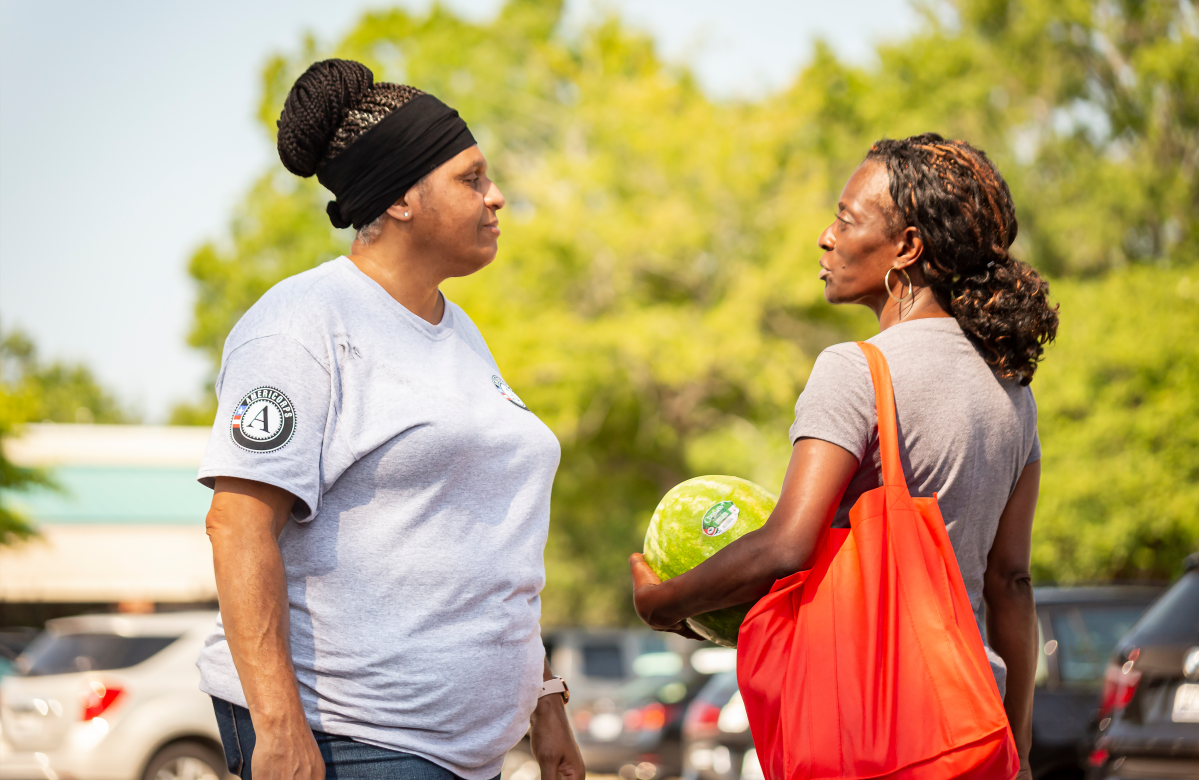

We reach out to elected officials at the state and federal levels to support legislation that bolster hunger policies.
Governmental nutrition programs matter.
- A child who cannot rely on dinner at home is assured an after-school meal because of our Kids Café Program.
- A working mother who is working hard to make ends meet knows she can get help to feed her family through the Supplemental Nutrition Assistance Program (SNAP).
- Federal food programs are only as strong as the support they receive on Capitol Hill. As a member of the national Feeding America network that works every day to protect and expand these vital programs, we work to ensure everyone in the Lowcountry has access to healthy food.
- We meet with our elected officials, sign on to letters that support hunger legislation as a part of the food banking community, and we are members of local coalitions that address the root causes of hunger.
FAQs: Food Access, Funding & Our Future
Right now, changes in federal funding and food programs are creating uncertainty for families — and for food banks like LCFB. Rising food costs, shifts in SNAP, and the loss of certain federal programs mean that more neighbors are turning to us for support.
We know many people are asking what this means for our community and how it affects the work we do every day. These FAQs are here to provide answers, share what we know today, and explain how we’re adapting to continue nourishing the Lowcountry.
Will LCFB begin to see a reduction in funding to purchase food given the current environment?
We are seeing a significant reduction in the amount of purchased food we can acquire due to rising food costs alongside the end of federal grants, COVID benefit programs and the LFPA federal farm program. We continue to be supported by 11 million pounds of TEFAP–funded food along with 15 million pounds of rescued retail food. We are aggressively fundraising to supplement those programs. We use those funds in intentional and creative ways to purchase the quantity and variety of foods for our neighbors to thrive. Please click here to learn more.
Has LCFB seen an increase in community members needing food?
Yes, food insecurity rates are at an all-time high with the cost of grocery items continuing to increase, along with other resources, such as the cost of transportation, housing, and basic utilities. ALICE households – defined as Asset Limited, Income Constrained Employed – are increasingly among those seeking assistance. These households have incomes above the federal poverty level and so may not qualify for some forms of assistance but still aren’t earning enough to afford the rising costs of living in their communities. For example, they may have to make difficult economic tradeoffs such as choosing between paying the rent/mortgage and buying food or getting needed healthcare or buying food. If you would like to learn more about the ALICE Data, please click here.
Will LCFB be changing its mission or commitment to our neighbors?
Our commitment to provide equitable, dignified, and consistent access to food to all through our values of Integrity, Respect, Commitment, Equity, Collaboration and Kindness will remain strong and as relevant as ever. LCFB will continue to be proactive and informed on the current environment and how that affects our work. We believe food is a basic human right and we know we must continue supporting the communities that are disproportionately impacted by food insecurity.
How is LCFB handling immigration changes?
LCFB will cooperate fully with law enforcement as required. However, we will do this in a way that protects our team members, our organization, and the community we serve. We will continue to assist our partners and neighbors in knowing their rights when it comes to receiving food assistance and immigration. Check out these resources for more information.
What’s happening with SNAP? How is it changing? How will people currently receiving SNAP be impacted? Does LCFB anticipate seeing an increase in demand for food assistance as a result of SNAP changes?
The Supplemental Nutrition Assistance Program (SNAP) is not going away, but H.R. 1, the One Big Beautiful Bill, included some significant changes to the program that will undoubtedly have an impact both for people who apply for and receive SNAP, and as a result, put greater pressure on the charitable food system. Some of the changes involve shifting more of the cost of administering the program from the federal government to the states. Historically, the federal government has covered 100% of the benefits distributed to eligible individuals. Starting in October 2027, states may have to cover up to 15% of that cost themselves. Beginning in October of 2026, states’ share of the administrative cost of running the program will increase from 50% to 75%. If the state of SC is unable to find the extra money in its budget to absorb these new expenses, it may need to resort to cuts to the program and/or cuts to other services/resources.
The H.R. 1 bill also made some changes to work requirements in the program that will result in more people having to document compliance in order to continue receiving benefits including some people who were previously exempt from the requirements such as veterans, homeless individuals, and foster care youth age 24 or younger. The more time and paperwork that is involved in meeting these requirements, the more likely it is that people will fall off the program and potentially lose benefits for up to three years or longer. Finally, the bill proposed limiting or disallowing some household expenses that individuals were previously allowed to claim as deductions when calculating their benefit levels which may result in people receiving less in monthly benefits than they were in the past.
Feeding America estimates that for every one meal a food bank provides, SNAP provides 9, and if the funding changes and new rules for eligibility ultimately result in fewer people having access to SNAP benefits, it’s likely that many of them will turn to the charitable food sector to fill the gap, and food banks like LCFB may not have the resources they need to fully meet the increased demand.
How will changes to SNAP impact local food systems?
Every $1 of SNAP spending generates between $1.50 to $1.80 in local economic activity, especially during downturns. SNAP spending supports food and beverage manufacturers, wholesalers, grocers, transportation companies, and farmers. The impending cuts and changes to the program will have significant impacts for all these entities. Smaller grocery stores that rely more heavily on SNAP dollars, especially in rural areas, may be forced to reduce their workforce, raise prices or shut down, and local farmers will lose income. It’s possible that the loss of SNAP revenues may create more food deserts in both urban and rural areas.
SNAP Ed-Nutrition Education and Programs - How will the loss of SNAP-Ed funding impact LCFB?
- These funds are used to promote healthy food choices and physical activity and to help neighbors make SNAP dollars stretch.
- The SNAP Education program was not funded in the reconciliation bill. SC has, on average, received $4M per year for the last few years, but as of October 1, 2025, SC will receive NO SNAP Ed funds.
- We will continue to receive SNAP Ed funding through September 30th, 2025 (which is when the federal fiscal year ends).
- LCFB has been a SNAP Ed partner for 10 years. LCFB received $800,000-$900,000 per year to support our various Nutrition Initiatives.
- Every $1 invested in SNAP Ed can yield up to $9.54 in future healthcare savings.
- The SNAP Ed cuts could negatively impact efforts to reduce diet-related chronic diseases in coastal South Carolina.
Our Perspective on the SNAP-Ed Program
- While we are disappointed the federal funding was cut, we remain committed to investing in the future of our neighbors and collaborating to advance healthy communities, which includes our community health and nutrition team
- Our nutrition team will continue to build relationships with our partners to work alongside them to implement proven policy, systems, and environmental changes, to positively influence behavior change to choose healthy foods, and to host nutrition education to support shopping on a budget and cooking healthy meals
- We know that choosing healthy foods will help our neighbors thrive and help break the cycle of food insecurity in the long term
-
While the breadth of the nutrition programming activities may be adjusted with the SNAP Ed cuts, we remain committed to multiplying the impact of providing food for today and empowering our partners and neighbors to make the best food choices in the future.
Will LCFB still offer programs like BackPack Buddies, School Pantry, and School Markets?
Yes, we will continue to offer our School Food Center programs, understanding how important they are in helping us meet the nutritional needs of children and overcoming the barriers of food access, like time and transportation. Schools offer a safe space and consistent access point for children and families who may need extra support. These programs are funded by grants, generous individual and corporate donors, and LCFB events like Chefs’ Feast and the Walk to Fight Hunger.
Will LCFB still serve after-school and summer meals to kids?
We know the importance of children having access to meals when school is not in session. While we have for many years and currently continue to operate our afterschool and summer meal programs through the federal Child and Adult Care Food Program (CACFP) and Summer Food Service Program (SFSP), we will explore alternative ways to sustain and enhance our Community Meals program without relying on federal funds. This will provide a buffer against the risk of future funding cuts as well as allow us the flexibility to better meet the needs of our neighbors without the limitations and onerous compliance imposed by federal and state policy.
Become An Advocate
Together, we can help neighbors in the Lowcountry get the food and resources they need to thrive. Contact your elected representatives and learn about essential feeding policies here.