


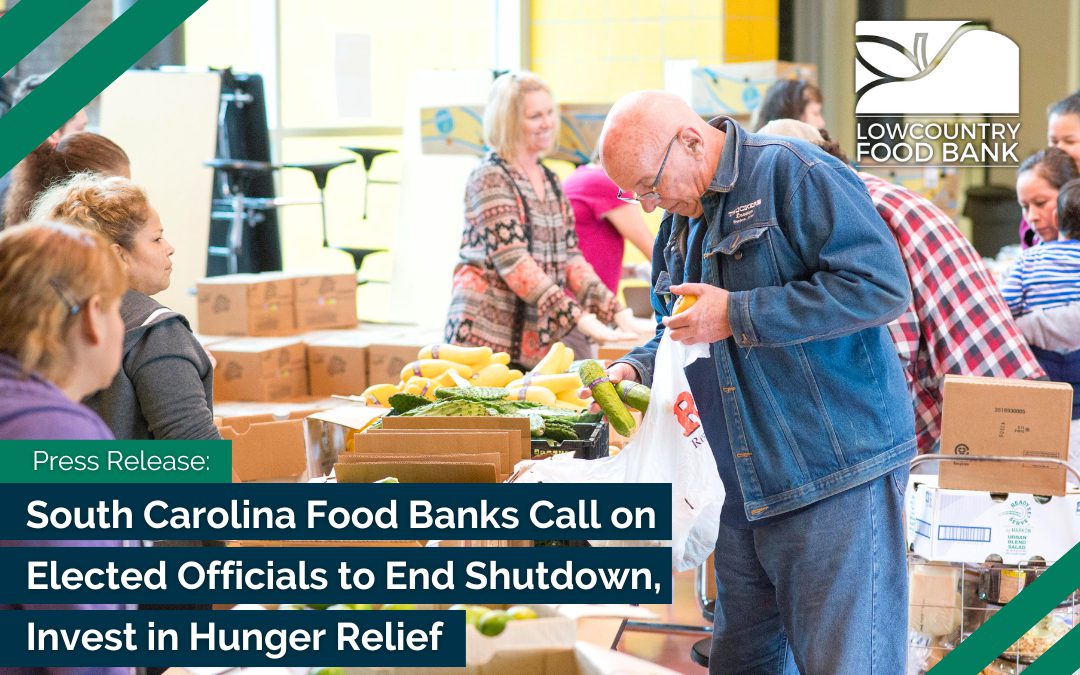
As Government Shutdown drags on, hunger is rising across the state
For Immediate Release: October 27, 2025
COLUMBIA, SC: Amid the highest food insecurity rates in nearly a decade, a government shutdown is creating hardship and uncertainty for tens of thousands of federal employees, active-duty military members, and people who work for federal contractors in South Carolina. Many hardworking people are just one paycheck away from needing support from their local food bank.
Even before the shutdown, food banks have been experiencing high levels of need, especially in areas still recovering from Hurricane Helene. Many food banks across the Carolinas are seeing an increase of 30% or more over this time last year.
1 in 7 people in South Carolina, including 1 in 5 children, live in food-insecure households, according to the most recent data from the U.S. Department of Agriculture (USDA). Those most at risk of experiencing hunger are children, older adults, veterans, and people with disabilities.
“Food banks and our partner agencies have shown time and again that we have the capacity to respond and serve our communities when the funding is available,” said Nick Osborne, CEO of Lowcountry Food Bank and Vice-Chair of Feeding the Carolinas. “Private support is vital to that mission. However, we cannot replace the sheer volume of nutrition assistance that federal programs like SNAP provide to neighbors experiencing hunger.”
If the federal government does not find a way to fund SNAP by November 1, Feeding the Carolinas expects to see a sharp rise in hunger across the state. SNAP (also known as food stamps) helps 556,000 people in South Carolina get enough to eat each month. 48% of South Carolina households receiving SNAP have children.
Even with robust support, food banks can provide only a fraction of the nutritional assistance that federal programs like SNAP provide. For every meal that a food bank provides to neighbors experiencing hunger, SNAP provides nine.
“Every day of delay adds to the strain families feel,” said Erinn Rowe, CEO of Harvest Hope Food Bank. “We ask our lawmakers to work together to end the shutdown invest in hunger relief programs that keep South Carolina families fed. This is a common-sense step to keep families secure, communities strong, and our economy moving forward.”
Cuts to federal and state food programs throughout 2025 have harmed food banks’ ability to meet this rising demand. The USDA and Congress significantly reduced funding to food banks in 2025. South Carolina’s legislature does not currently allocate funding to food banks in the state.
As need rises, South Carolina’s food banks will continue to show up for their communities, but meeting this challenge requires pulling together. Food banks are calling on our communities to stand united—lawmakers, businesses, faith communities and individuals—to ensure that no one in South Carolina goes without the food they need.
How Individuals Can Help:
- Donate to your local food bank. Food banks are incredibly efficient.
- Volunteer at your local food bank. Bring a friend!
- Call on your elected officials to come together to end the shutdown and invest in hunger relief.
Where to Find Food Assistance:
Individuals who need food assistance can get help to find groceries and meals near them. Food banks partner with hundreds of local community organizations to distribute food in every county in South Carolina. To find help near you, use your local food bank’s website (linked below) or call them directly.
South Carolina’s Food Banks:
- Lowcountry Food Bank (coastal South Carolina)
- Second Harvest Food Bank of Metrolina (greater Charlotte area and upstate)
- Harvest Hope Food Bank (Midlands and upstate)
- Golden Harvest Food Bank (Aiken and surrounding counties)
Media Contact:
Jill Hirsekorn
Lowcountry Food Bank
VP, Communications and Marketing
2864 Azalea Drive, N. Charleston, SC 29405
Office: 843-747-8146 ext. 167, Mobile Phone: 843-819-5115
About Feeding the Carolinas
Feeding the Carolinas is a dual-state association of the ten Feeding America-affiliated Food Banks in North and South Carolina. Feeding the Carolinas’ member Food Banks are working to end hunger in the Carolinas. They support more than 3,700 local charitable agencies, which serve the 2.3 million Carolinians across 146 counties facing hunger annually.
###
About the Lowcountry Food Bank: Feed. Advocate. Empower.
The Lowcountry Food Bank serves the 10 coastal counties of South Carolina and distributed more than 45 million pounds of food in 2024. The Lowcountry Food Bank helps fight hunger by distributing food to nearly 240 partner agencies including on-site meal programs, homeless shelters, and emergency food pantries. The Lowcountry Food Bank advocates on behalf of those who experience food insecurity and helps empower people to make healthy and nutritious food choices. For more information, visit the Lowcountry Food Bank website.
Recent Comments