


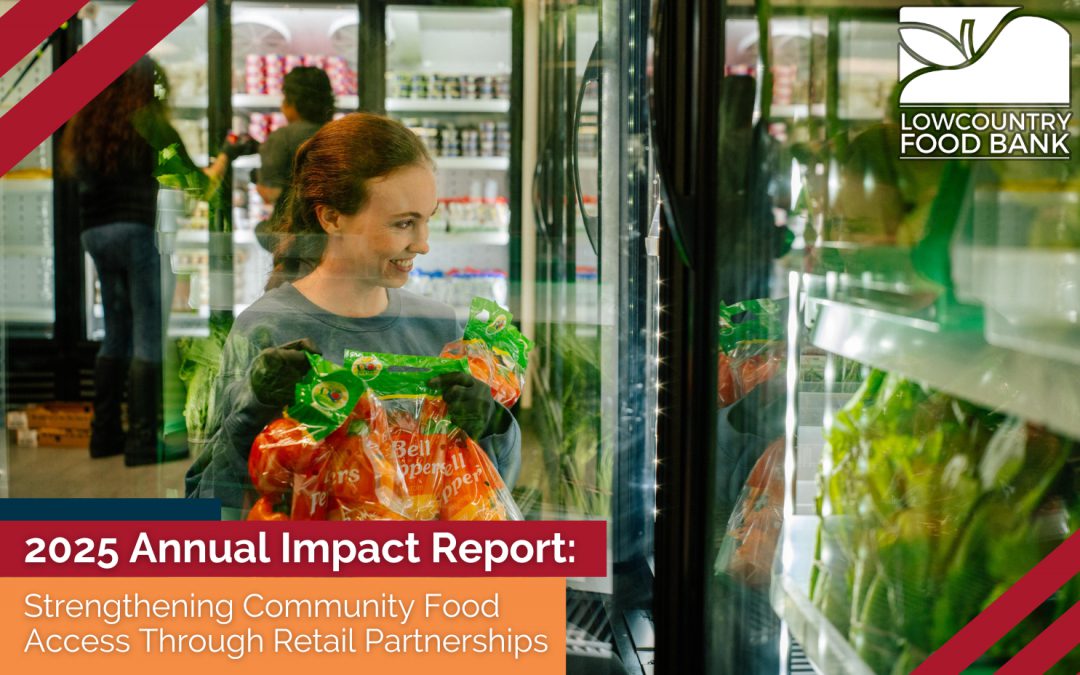
Retail and food industry partners are a cornerstone of our mission to ensure neighbors across the 10 coastal counties have consistent access to healthy food. More than 40% of all food distributed comes directly from these retail partners, reflecting the scale and importance of these relationships.
In 2025, these partnerships helped us recover more than 16.6 million pounds of food, an increase of 1.1 million pounds compared to 2024. This growth reflects both stronger collaboration and improved recovery systems across our network of more than 240 retail grocers, wholesalers, growers, and other food industry partners.
A significant portion of recovered food continues to support nutritional quality and variety in our distribution:
- 35% is fresh produce
- More than 20% is protein
Operational improvements also strengthened our efficiency and reach. We successfully scheduled and covered 90% of available retail pickups, helping reduce missed opportunities for food recovery. Across the year, we completed nearly 54,000 food donation pick-ups and conducted 330 retail partner visits to maintain and deepen these relationships.
Distribution channels also continued to evolve. Partner agencies picked up 8.5 million pounds of food in 2025, representing a 40% increase over the past five years—highlighting the growing capacity of our community partners to move food quickly and effectively to those who need it most.
Together, these efforts demonstrate a system that is not only growing in scale but also becoming more efficient, responsive, and impactful year over year.
This article was originally published in our 2025 Annual Impact Report.
About the Lowcountry Food Bank: Feed. Advocate. Empower.
Lowcountry Food Bank serves the 10 coastal counties of South Carolina and distributed more than 42 million pounds of food in 2025. The Lowcountry Food Bank helps fight hunger by distributing food to nearly 240 partner agencies, including on-site meal programs, homeless shelters, and emergency food pantries. The Lowcountry Food Bank advocates on behalf of those who experience food insecurity and helps empower people to make healthy and nutritious food choices. For more information, visit the Lowcountry Food Bank website.
Recent Comments