


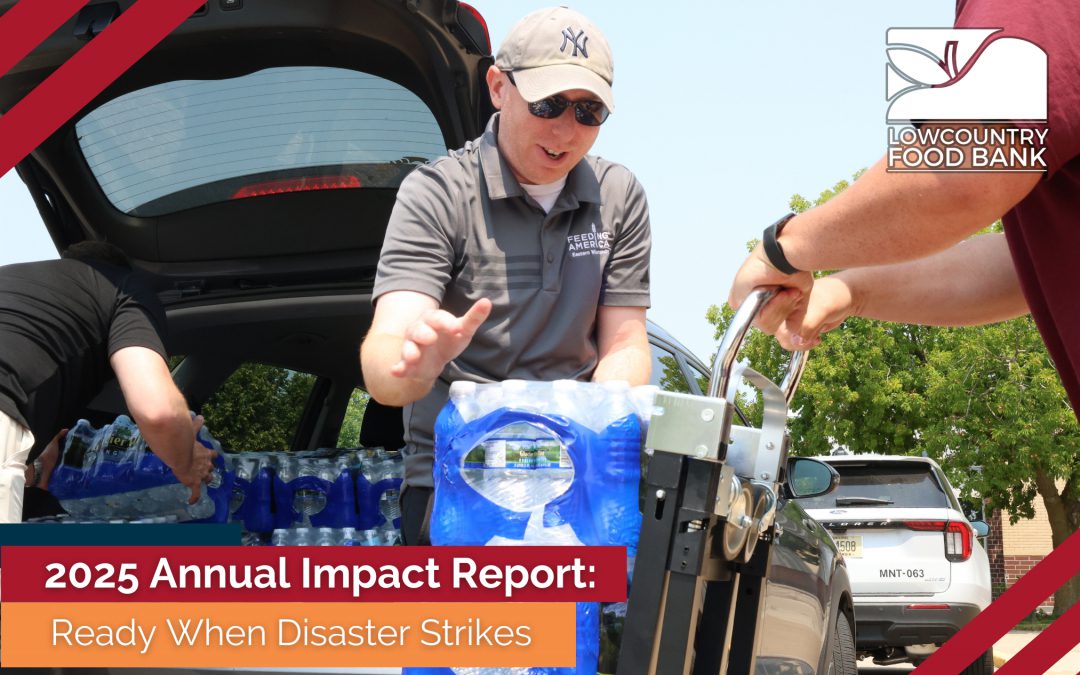
When emergencies impact our region, LCFB serves as a critical link between donated food and the people who need it most. Our Disaster Response Team ensures that food and other essential grocery items and needed supplies can move quickly and safely into communities affected by a disaster. In partnership with the Feeding America network, Feeding the Carolinas, select LCFB partner agencies and other emergency relief organizations, we proactively coordinate the receipt, storage, and distribution of food and supplies across the counties we serve as needed.
A key part of this system is our collaboration with local Voluntary Organizations Active in Disaster (VOAD). Across our service area, VOAD members play an important role in extending our reach during emergencies. By working together and maintaining pre-positioned supplies, we help ensure these trusted local partners are ready to distribute food quickly within their own communities when disaster strikes.
This work is guided by our comprehensive Disaster Response Plan that ensures we can act quickly and effectively when crises occur. The plan, which we revisit each year, helps us maintain essential services, protect staff and facilities, and continue operations even under challenging conditions. It also outlines how we coordinate with regional and national partners when additional resources—such as staffing, equipment, or supplies—are needed.
Our approach follows nationally recognized best practices, including guidance from the U.S. Department of Homeland Security, the National Incident Management System (NIMS), and the Emergency Management Accreditation Program (EMAP). While the frameworks are technical, the purpose is simple: to ensure that our response is organized, reliable, and effective when our communities need it most.
At its core, disaster preparedness is an extension of the same commitment reflected in our day-to-day operations—ensuring that whether in times of stability or crisis, our neighbors have access to food, and our partner agencies have the support they need to serve their communities without interruption.
About the Lowcountry Food Bank: Feed. Advocate. Empower.
Lowcountry Food Bank serves the 10 coastal counties of South Carolina and distributed more than 42 million pounds of food in 2025. The Lowcountry Food Bank helps fight hunger by distributing food to nearly 240 partner agencies, including on-site meal programs, homeless shelters, and emergency food pantries. The Lowcountry Food Bank advocates on behalf of those who experience food insecurity and helps empower people to make healthy and nutritious food choices. For more information, visit the Lowcountry Food Bank website.
Recent Comments