


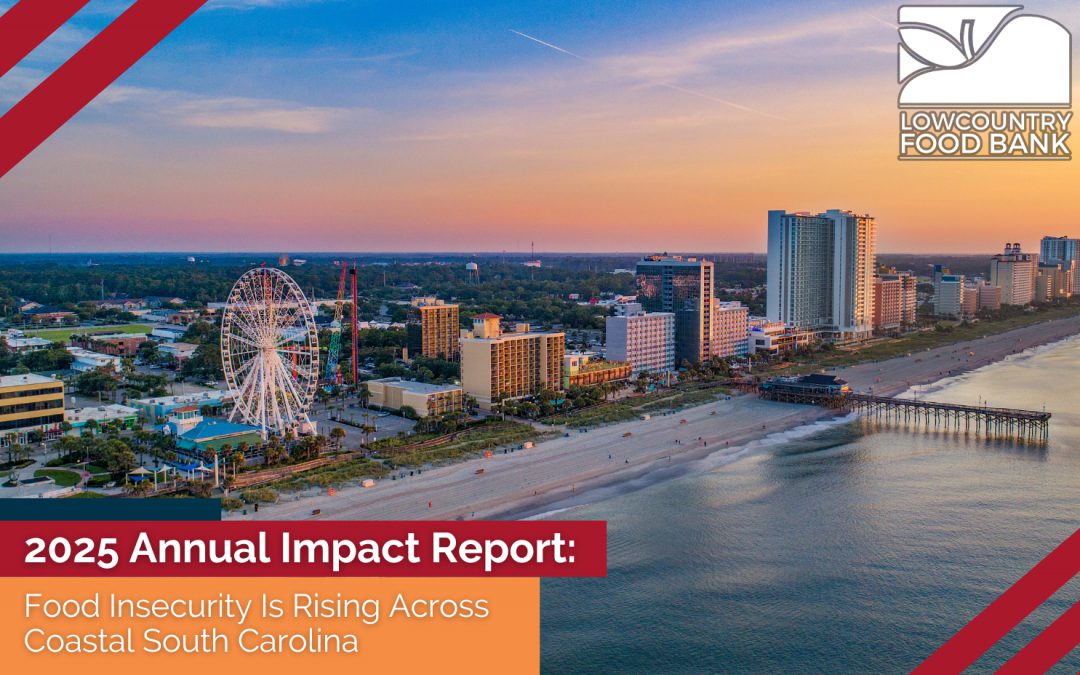

Food insecurity increased across nearly every Census tract in the 10 coastal South Carolina counties we serve between 2023 and 2025, reflecting growing economic strain on families and communities throughout the Lowcountry.
This map illustrates the growing rates of food insecurity across our service area from 2023 to 2025. Nearly every Census tract experienced an increase in food-insecure residents during this period — reversing much of the progress made prior to COVID-19.
Overall, food insecurity across our service area rose by 55.6%, representing nearly 73,000 additional neighbors facing uncertainty about where their next meal will come from.
We expect these numbers to continue rising due to reductions in federal nutrition support, persistent inflation, increasing food and freight costs, and ongoing economic uncertainty.
Together, these pressures are placing additional strain on families, communities, and hunger-relief organizations across the Lowcountry.
This article was originally published in our 2025 Annual Impact Report.
About the Lowcountry Food Bank: Feed. Advocate. Empower.
Lowcountry Food Bank serves the 10 coastal counties of South Carolina and distributed more than 42 million pounds of food in 2025. The Lowcountry Food Bank helps fight hunger by distributing food to nearly 240 partner agencies, including on-site meal programs, homeless shelters, and emergency food pantries. The Lowcountry Food Bank advocates on behalf of those who experience food insecurity and helps empower people to make healthy and nutritious food choices. For more information, visit the Lowcountry Food Bank website.
Recent Comments